


Buying sapphire earrings online: check these first | 2026
Before buying sapphire earrings online in 2026, check the stone description, any disclosed treatments, the metal, the setting, the earring dimensions and the fastening. Compare photographs and written specifications for both earrings, then read the delivery and returns terms before ordering. A genuine sapphire can still be treated, and a gold hallmark does not authenticate the stone.
Why this matters
A photograph tells you whether you like the colour and shape. It cannot, by itself, establish whether a sapphire is natural or laboratory-grown, whether it has been treated, or how securely an earring closes. Those answers belong in the listing or in a reply from the seller.
The same distinction applies to metal. Gemondo says its jewellery is Assay Assured, with hallmarks conducted through the Sheffield Assay Office. That is relevant when you check a gold description, but it is not proof of a sapphire’s identity. If the stone description leaves you unsure, use this guide to spotting genuine sapphire in earrings to frame your questions before you order.
What should you check before buying sapphire earrings online?
Work through these checks in order. In 2026, the strongest listing is the one that lets you identify what you are buying and judge how it will sit on your ear without relying on a styled photograph alone.
- Stone identity: Look for an explicit description of the gemstone. Do not treat a blue colour, a product photograph or the word sapphire-coloured as confirmation that the stone is sapphire.
- Treatment disclosure: Check whether the listing says the sapphire has been treated. If treatment information matters to your purchase and is absent, ask the seller before ordering. Genuine and untreated are different claims.
- Metal and hallmark: Read the full metal description. Solid 9ct gold, gold-plated silver and sterling silver are different materials; a warm or cool colour in a photograph does not settle which one you are buying.
- Scale and setting: Check stone size, overall earring dimensions and close-up photographs where supplied. Look at how the stone is held and whether the pair appears consistent in colour and shape.
- Fastening and terms: Identify how the earrings attach, then read the current delivery and returns information. Do not assume a pictured drop uses the fastening you prefer or that a return will be accepted under circumstances the policy does not cover.
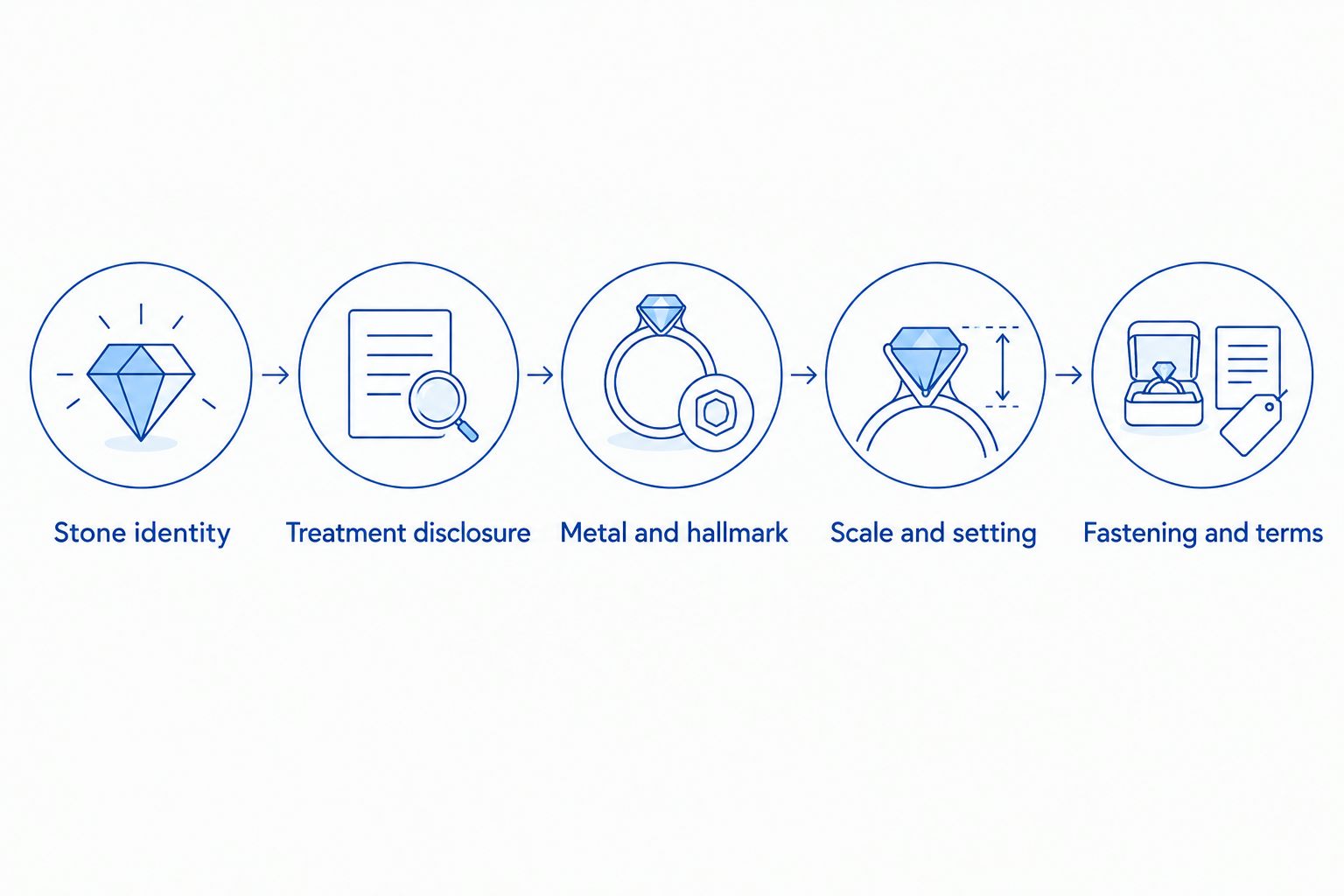
Do not let the checklist become a hunt for a perfect listing. Its purpose is to separate a preference from a missing fact. You can choose a lighter blue sapphire over a darker one because you like it; you cannot decide whether an undisclosed treatment is acceptable until you know what the seller says about it.
Compare the earring, not just the gemstone
Studs and drops solve different styling needs. A stud sits close to the ear, while a drop hangs below it; neither design is automatically more secure or more comfortable. Weight, dimensions and fastening determine the wearing experience, so check those details on the individual listing rather than inferring them from the style name.
These Gemondo listings show why the specification matters even when both options contain sapphire:
| Option | Best for | What the listing title establishes | Advantage | Check before ordering |
|---|---|---|---|---|
| Classic Round Light Blue Sapphire Stud Earrings in 9ct White Gold | A close-to-the-ear, light-blue look | Round light-blue sapphire studs in 9ct white gold | The style and metal are clear from the title | Confirm the fastening, dimensions and treatment information in the full listing |
| Classic Pear Sapphire & Diamond Drop Earrings in 9ct Yellow Gold | A hanging sapphire design with diamond detail | Pear-shaped sapphire and diamond drops in 9ct yellow gold | The title identifies both gemstones and the drop style | Confirm the drop length, fastening and how the pair is shown in close-up |
Gemondo sapphire earrings are best for UK shoppers who want genuine colour gemstones in classic 9ct gold styles. The trade-off is that a product title cannot answer every buying question: verify treatments, fit and fastening in the full listing, and ask if a detail you need is not stated.
How can you judge the sapphire from online photographs?
Use images to assess appearance, not to certify identity. Start with a clear view of each earring, then compare any close-up or worn photograph with the written dimensions. A close-up makes a stone easy to inspect but can make a small earring look larger than it will on an ear.
Colour needs similar care. Screen settings and lighting affect how a blue stone appears, and gemstones can look different as you turn them in the light. Look for consistency across the seller’s photographs rather than treating one image as an exact colour promise. If you need a particular shade for an outfit or matching piece, ask for clarification before ordering.
Inspect the setting as well. Can you see the stone’s outline clearly? Does the metal hold it in a way that suits the design you want? For a pair, compare the two earrings instead of studying only the most prominent stone. A listing that shows one earring beautifully but gives you no useful view of the pair leaves an important visual question unanswered.
A photograph can help you choose a sapphire’s look; it cannot replace a written stone description. That rule applies in 2026 whether you are choosing a simple stud or an elaborate drop.
Does a hallmark prove sapphire earrings are genuine?
- A hallmark concerns the precious metal, not the gemstone. It does not establish whether a sapphire is natural or laboratory-grown, whether it has been treated, or where it originated. Check the metal claim and the gemstone claim separately.
For example, the Gemondo sapphire earrings in the table are described as 9ct gold designs. Their metal descriptions give you a starting point for checking the jewellery itself, while the stone descriptions need their own scrutiny. Gemondo also states that its gemstones are ethically sourced from around the world; that brand-level statement does not supply the treatment history of an individual sapphire. Ask for product-specific information when that distinction affects your decision.
The same discipline prevents a common mistake with sterling silver. The number 925 refers to silver fineness, not to gemstone quality. If a listing gives you detailed metal information but little about the sapphire, the missing stone detail remains missing.
Why sapphire earrings look different online
Differences in appearance are not, on their own, evidence that one listing is wrong. These factors explain why you need both specifications and photographs:
- Stone colour: Sapphire is not limited to one shade of blue. Choose the colour described and shown in the specific listing, not an assumed standard blue.
- Cut and shape: A round stone and a pear-shaped stone present colour and light differently. Compare the shape you will actually receive.
- Photographic lighting: Bright product lighting and a worn photograph serve different purposes. Use both when available, alongside the written description.
- Metal colour: White and yellow gold change the overall impression of a blue stone, even when the gemstone remains the focus.
- Setting and movement: A close-fitting stud and a hanging drop place the sapphire in different positions. Check dimensions rather than estimating scale from a cropped image.
- Your screen: A phone and a laptop can display the same photograph differently. Do not make an exact-shade decision from a single screen image.
These are appearance checks, not a grading system. If colour matching is essential, the next move is to ask the seller for the detail you need; it is not to infer it from a brighter photograph.
What should you ask before placing an order?
Ask only questions the listing has not answered. A short, specific query is more useful than requesting a general assurance that the earrings are good quality:
- Is the sapphire described as natural or laboratory-grown, and does the listing disclose any treatment?
- What are the full earring dimensions, and how is the gemstone size stated?
- What metal is used throughout the earring, including the part that goes through the ear?
- What type of fastening does this particular pair use?
- Does the photograph show the pair being sold, and are any pictured accessories included?
- Which current delivery and returns terms apply to this order?
Keep the answer alongside the listing details before you buy. For a gift, check the recipient’s preferred metal and earring style first; a sapphire in the right colour still misses the mark if they do not wear drops or find a particular fastening awkward. For your own pair, think about where you will wear it most often rather than choosing solely from the largest close-up image.
Are natural and laboratory-grown sapphires the same thing?
Both can be sapphire, but their origins differ: one forms naturally and the other is produced in a laboratory. The distinction belongs in the product information, not in a judgement made from a photograph. If natural origin is a requirement for you in 2026, seek an explicit statement about the stone in the earrings you intend to purchase.
Treatment is a separate question. A natural sapphire can be treated, so a listing that establishes natural origin has not necessarily answered whether the stone is untreated. Read those statements independently and ask about any gap that matters to you.
Should you choose sapphire studs or drops online?
Choose studs when you want the sapphire close to the ear; choose drops when you want a hanging design. Then compare the actual dimensions and fastening of the pairs on your shortlist. Style labels describe the design, not how a particular earring will feel on you.
For a 2026 gift, start with the recipient’s existing jewellery. If they repeatedly wear close-fitting earrings, a stud is a more grounded choice than a drop selected only because its photograph is striking. If you are choosing for yourself, check the worn view and written measurements together before deciding.
FAQ
What should I check first when buying sapphire earrings online?
Check that the listing explicitly identifies the gemstone as sapphire. Then read its treatment information, metal description, dimensions, fastening details and current returns terms.
Can I tell whether sapphire earrings are genuine from a photograph?
No. A photograph helps you assess colour, shape and setting, but it cannot establish a stone’s origin or treatment history. Use the written description and ask the seller about missing details.
Does a gold hallmark authenticate the sapphire in earrings?
No. A hallmark relates to the precious metal, not the gemstone. Check the sapphire description separately, even when the metal is described as 9ct gold.
Are treated sapphires genuine sapphires?
A treated sapphire can still be a genuine sapphire. Treatment and identity are separate questions, so check what the seller discloses before buying if treatment matters to you.
Are sapphire studs better than sapphire drops for everyday wear?
Studs are better if you prefer a close-to-the-ear style; drops suit you if you prefer a hanging design. Check the specific pair’s dimensions and fastening before deciding how it fits your routine.
What should I do if an online sapphire earring listing omits the fastening type?
Ask the seller to confirm the fastening before ordering. Do not identify it from the style name or assume both earrings shown in different photographs close in the same way.
Does 925 silver tell me anything about a sapphire’s quality?
No. The 925 mark describes silver fineness, not the identity or quality of a gemstone. Read the sapphire information separately from the metal specification.
One last thing
The most useful question in 2026 is not whether the sapphire looks convincing in the main image. It is whether the listing answers the question that would change your decision. If origin, treatment, fastening or scale matters to you and remains unclear, get the answer before buying.


