


How to care for peridot jewellery: gentle care 2026
Clean peridot jewellery with lukewarm water, a small amount of mild soap and a soft cloth or brush, then rinse gently and dry it completely. Store each piece separately in a soft pouch or lined compartment so harder jewellery cannot scratch the stone. In 2026, the safest routine is still the simplest: avoid steam, ultrasonic cleaners, harsh chemicals and sudden temperature changes.
How do you clean and store peridot jewellery?
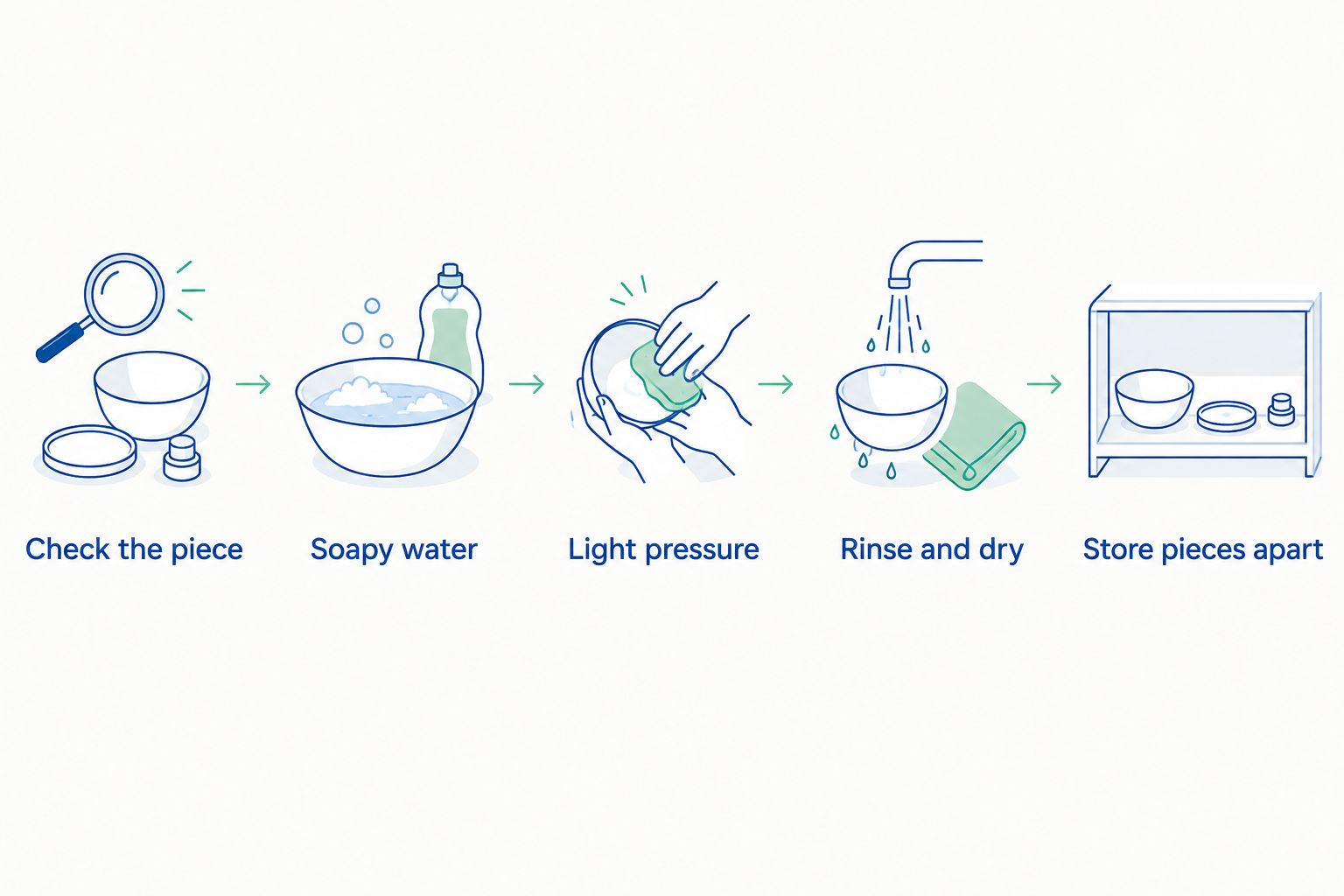
Follow this sequence for routine cleaning in 2026. Start gently: a setting, chain or decorative detail needs attention as well as the peridot itself.
- Check the piece first. Look for a loose stone, bent prong, damaged clasp or broken chain. If anything moves or catches, stop and ask a jeweller to inspect it before cleaning.
- Prepare lukewarm soapy water. Add a small amount of mild soap to a bowl of lukewarm water. Do not use hot water or a household cleaning spray.
- Clean with light pressure. Use a soft cloth or soft-bristled brush around the stone and setting. Work carefully behind the stone, where residue can collect, without pushing against the setting.
- Rinse and dry. Rinse gently with clean lukewarm water, keeping small pieces away from an open drain. Pat the jewellery dry with a soft, lint-free cloth; let any moisture trapped around the setting dry before storage.
- Store pieces apart. Put the dry jewellery in its own soft pouch or lined compartment. Fasten necklaces before storing them so their chains do not tangle around another piece.
The steps are the same whether you are caring for a peridot ring, pendant or earrings. What changes is where you look for wear: inspect ring settings after knocks, earring fittings before wearing them, and necklace clasps before putting them away.
Why this matters for peridot
Peridot measures 6.5 to 7 on the Mohs hardness scale, according to the Gemological Institute of America. That makes protection from scratches and knocks part of everyday care, not just a concern when you clean it. A ring worn while handling hard surfaces faces different contact from a pendant resting against clothing.
Gemondo peridot jewellery is best for someone who wants a colourful gemstone and is willing to remove it before rough activity. The trade-off is practical: careful cleaning will not prevent damage from a knock, and a soft storage pouch will not repair a loose setting. If a stone shifts, get the setting checked rather than trying to press it back into place.
For a concrete example, the O Leaf peridot wishbone ring in 9ct yellow gold is a peridot ring, so the ring-specific checks below apply. Clean the stone gently, but check that it remains secure before you wear the ring again.
Which cleaning method should you use?
For routine care in 2026, choose the least aggressive method that removes the residue. Do not treat a dull-looking stone as a reason to scrub harder: residue, a worn setting and damage need different responses.
| Method | Best for | Advantage | Limitation |
|---|---|---|---|
| Soft, dry cloth | Surface marks on an otherwise clean piece | No soaking or brush pressure | Does not reach residue behind a setting |
| Lukewarm water and mild soap | Routine cleaning of secure jewellery | Reaches more than a dry cloth when used gently | Requires a careful rinse and complete drying |
| Professional inspection and cleaning | Loose settings, damage or residue you cannot remove gently | A jeweller can assess the setting before cleaning | Requires handing the piece over rather than cleaning it immediately |
Use lukewarm soapy water for secure peridot jewellery; use a jeweller when the setting is loose or the stone looks damaged. A dry cloth is useful between washes, but it does not replace a closer look at the setting. If gentle cleaning does not remove a mark, stop rather than switching to stronger chemicals.
How to care for a peridot ring
Remove a peridot ring before activities that put pressure on your hands or bring the stone against hard surfaces. Clean around the setting with a soft brush, then check it again once the ring is dry. A stone that moves or a prong that catches fabric needs a jeweller, not another wash.
Gemondo peridot rings include designs set in 9ct yellow gold. The metal and stone both need gentle handling, but do not assume a cleaning product intended for gold is suitable for the peridot. Read the product's care information before using a specialist solution; mild soap and lukewarm water are the straightforward routine choice for a secure piece.
Store the ring in its own lined compartment, especially if you keep it near diamond jewellery. Separate storage prevents the stones and metal settings from rubbing together when you reach into the box.
How to care for peridot earrings and pendants
For earrings, check the fastening and clean the area around the setting without pressing on the stone. Dry the fittings and any recesses before putting the earrings away. If a fastening feels loose, deal with that issue before wearing the pair again.
For pendants, unclasp the chain before cleaning if that lets you reach the setting without pulling on it. Do not tug the chain to free residue caught near the pendant. Once dry, fasten the chain and lay it separately so it does not knot around the stone or another piece.
Gemondo peridot earrings are best for someone who wants the green stone away from the knocks a ring can encounter during hand use. Their drawback is that fittings and small recesses still need checking and drying. A pendant has the same storage priority: keep its chain from rubbing against the stone.
Why peridot care varies
The cleaning method stays gentle, but these factors change what you check before and after cleaning:
- Setting condition: A loose stone or bent prong calls for inspection before water or brushing.
- Jewellery type: Rings need particular attention after knocks; earrings need fastening checks; pendants need chain and clasp checks.
- Residue location: Dirt behind a stone takes more careful access than marks on an exposed surface. Do not increase pressure to reach it.
- Other materials: A piece containing additional gemstones, enamel or plating needs care suited to the whole piece, not just the peridot.
- Storage neighbours: Harder jewellery and exposed metal settings can rub against peridot when pieces share a compartment.
For 2026 care, the useful distinction is secure piece versus damaged piece, not expensive piece versus inexpensive piece. A secure piece gets a gentle wash. A damaged piece gets an inspection before cleaning.
How should you store peridot jewellery?
Store peridot only after it is fully dry. Give each piece a soft pouch or its own lined space, away from jewellery that can scratch it. Keep chains fastened and laid without tension; do not drop a ring or pendant into a crowded compartment.
Separate storage also makes your next check easier. You can see the setting, clasp and stone before wearing the piece, rather than finding a tangled chain or damaged fitting while getting dressed. A pouch protects against contact with neighbouring jewellery, but it is not a substitute for handling a piece carefully.
If you carry jewellery while travelling, keep pieces individually protected rather than loose together in a bag. Check fittings when you unpack. That small inspection matters more than adding another layer of wrapping around a setting that was already loose.
What should you avoid when cleaning peridot?
Avoid steam and ultrasonic cleaners. Do not use bleach, abrasive powders or a stiff brush on the stone or its setting. Keep water lukewarm rather than exposing the jewellery to a sudden change in temperature.
Do not scrape residue from a setting with a sharp object. If a soft brush cannot reach it, a jeweller can inspect the piece and clean it without you putting extra pressure on a small prong. Likewise, polishing a metal surface is a different task from washing a gemstone: keep specialist metal cleaners away from the peridot unless the product instructions explicitly cover the complete piece.
An uncertain setting changes the order of work. Inspect first, clean second. No amount of careful rinsing makes a loose stone secure.
Can you wear peridot jewellery every day?
Yes, you can wear peridot jewellery regularly if you protect it from knocks and check its setting. For 2026 daily care, remove rings before rough tasks and store all pieces separately when you take them off. Regular wear does not call for aggressive or scheduled deep cleaning; clean visible residue gently when needed.
A pendant or earrings can avoid some of the direct hand contact a ring receives, but neither is damage-proof. Check a pendant's clasp and chain, and check earring fittings before wearing them. Your choice should reflect how and where you plan to wear the piece, not a claim that one setting never needs care.
Can you put peridot jewellery in an ultrasonic cleaner?
No: do not use an ultrasonic cleaner for routine peridot jewellery care. Use lukewarm water, mild soap and a soft cloth or brush for a secure piece instead. If residue remains or the setting looks uncertain, ask a jeweller to assess it.
What if your peridot looks cloudy after cleaning?
First check whether soap or moisture remains around or behind the setting, then rinse gently and dry the piece thoroughly. If its appearance does not improve, stop cleaning and have a jeweller inspect it. Do not try a stronger chemical or abrasive to force a clearer finish.
FAQ
What's the safest way to clean peridot jewellery at home?
Use lukewarm water, mild soap and a soft cloth or brush on a piece with a secure setting. Rinse gently and dry it fully before storage.
Can you use a toothbrush on peridot jewellery?
Use only a soft-bristled brush with light pressure. Do not brush a loose setting or scrub hard to reach residue.
Can peridot jewellery go in an ultrasonic cleaner?
No, skip ultrasonic cleaning for routine peridot care. Choose gentle hand cleaning for a secure piece or ask a jeweller to inspect a damaged one.
How do you store a peridot ring?
Store a dry peridot ring in its own soft pouch or lined compartment. Keep it apart from harder stones and exposed metal settings that can rub against it.
Can you wear a peridot ring every day?
Yes, with care: remove it before rough activities and check the setting after knocks. Clean visible residue gently rather than using harsh products.
Should you clean peridot earrings and a pendant the same way?
Use the same gentle cleaning method, but check different fittings. Inspect earring fastenings and dry their recesses; check a pendant's chain and clasp.
What should you do if a peridot stone moves in its setting?
Stop wearing and cleaning the piece, then ask a jeweller to inspect it. Do not push the stone back into place yourself.
One last thing
Before you clean peridot jewellery in 2026, look at it while it is dry. A visible gap at a setting or a fastening that no longer closes securely is not dirt; cleaning cannot fix it. Gemondo's peridot jewellery still needs that simple check, whether the piece is a ring, pendant or pair of earrings.


